Ernesto DiSabatino
STONEMASON · BUILDER · THE FIRST STONE
FROM PIETRA · CHAPTER 1This was no small charge for a non-English-speaking immigrant. He was not famous. He was not wealthy. Yet he was their first choice.
A stonemason who arrived speaking no English left his community a cathedral, and Rome itself recognized what his hands had made.
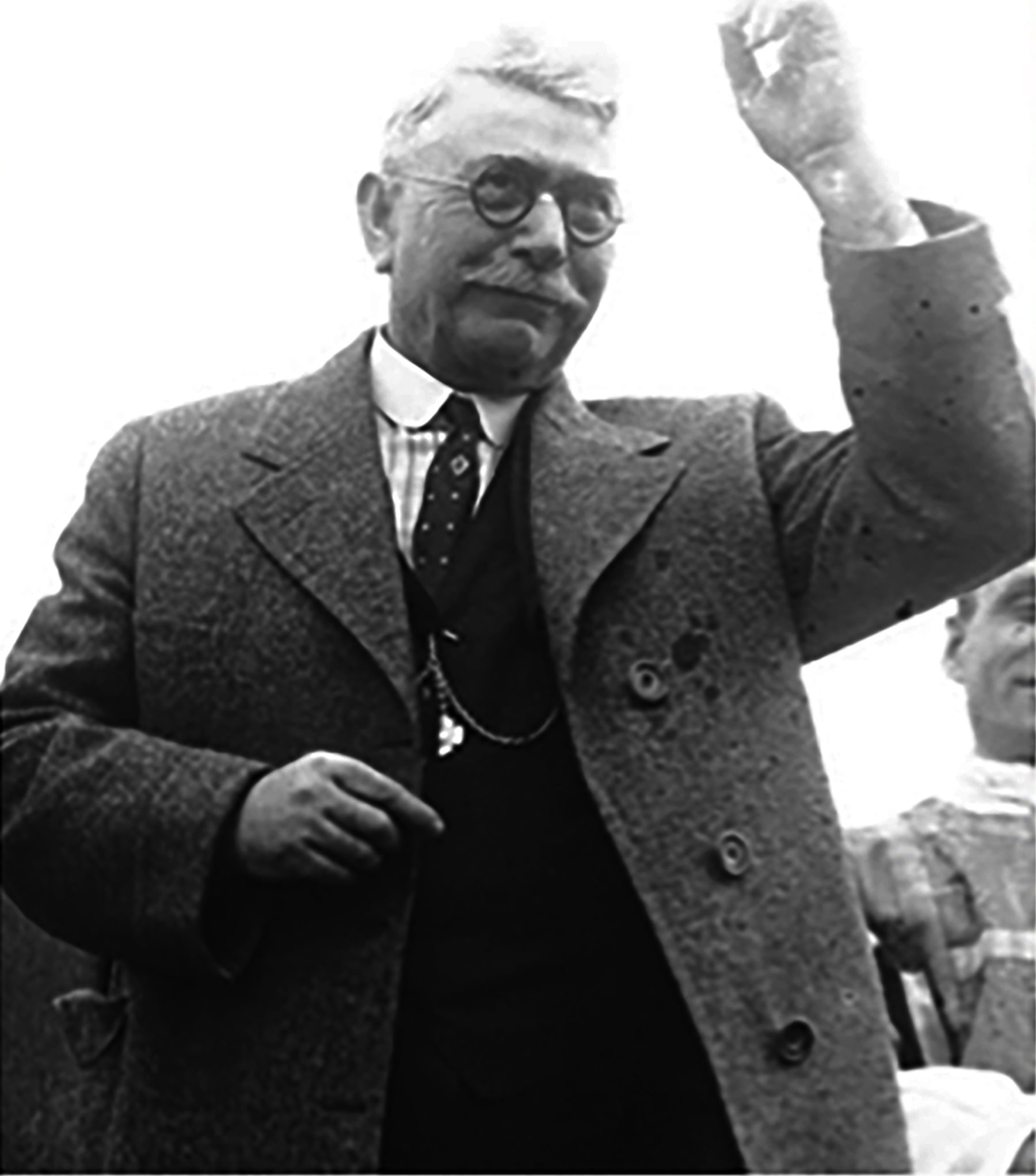
From the hills of Abruzzo to one of Wilmington’s highest peaks.
- SANT’OMEROHome was a village in the province of Teramo, in the hills of Abruzzo, about ten miles from the Adriatic. Ernesto was born there on December 27, 1865, the fourth of five sons in a family of building tradesmen.
- THE PENINSULAA mason on the move. As a superintendent for the railroad builders Caffuri and Angelini, he worked his way up Italy from Pescara and Castellammare, building station houses, bridges and tunnels. His family traveled with him by horse and wagon, and brothers, nephews and cousins followed from job to job looking for work.
- THE SIMPLON · 1903 TO 1905His last job in Italy was at Varzo, on the Swiss border, where he served as master stonemason on the Simplon Tunnel through the Alps. In October 1905 his eldest son, Arthur, fell ill, and the family went home to Sant’Omero.
- MARCH 1906Arthur and Clarence resolve to go to America. Ernesto had seen sons cross the ocean and forget their parents. He would not allow it. “If you two want to go, then I’ll have to go with you.”
- 185 BLEECKER STREETOn March 31, 1906, the steamer Bulgaria docks at New York. Ernesto comes ashore with his two sons, eighty dollars, and one address in his pocket: his brother-in-law, Amedeo De Laurentis, a ladies’ tailor at 185 Bleecker Street. The clerk wrote it on the manifest beside their names. It was the heart of Manhattan’s Italian quarter, and they stayed only a little while.
- WILMINGTONNew York was too big; he feared losing hold of his children. Philadelphia did not suit him. Wilmington, a smaller city where the Mozzani brothers from Sant’Omero and other friends in the masonry trade had settled, did. He worked as a journeyman, building brick manholes for the telephone company, and sent money home to bring the rest of the family over.
- DECEMBER 1906His wife, Angeladea, and four of their children reach Naples to find the crew of their Italian liner on strike. They sail instead on the White Star liner Cedric: Dominick, Splendora, Paul and little Clelia. They spend Christmas on the high seas and are held at Ellis Island on arrival.
- 1907The family is reunited at 1806 West Fourth Street. Within the first month, Clelia, not yet two years old, dies of diphtheria. The first stone they set in American ground was a grave.
- THE FIRST CONTRACT · 1908In 1908 Ernesto goes into business for himself. One of the first jobs is a three-story house at Fourth and duPont for Franz Gengebach, the family’s landlord. Three dollars a thousand to lay the bricks. “It’s all right. It’s a start.” Dominick, thirteen and already speaking English, serves as his father’s interpreter.
- FIFTH AND LINCOLN · 1910On a lot that was almost a swamp, among the cattails, he and his sons build a three-story house of their own, the first of many they would raise in Wilmington. Neighbors wondered at the risk. In Dominick’s words, “Pop took an adventure.”
- A SECOND CLELIABy 1910 there are two more children at the table: Joseph, and a daughter who is given her lost sister’s name.
- A FAMILY AFFAIRCousins follow from Italy and join the work. One job leads to the next. By Dominick’s account, theirs was the first Italian contracting business in Wilmington: Ernest DiSabatino and Sons.
- THE GREAT WARBarely ten years after leaving Italy, Dominick enlists in the U.S. Army to fight for America. The war ends before he ships out.
- 1924The call goes out to build a church for the new parish of St. Anthony of Padua. The Italian community entrusts it to Ernesto.
- 1926St. Anthony of Padua is dedicated. It still stands on one of the city’s highest peaks.
- 1927Diabetes costs him a leg and forces him to retire. His sons Arthur, Clarence, Dominick and Paul carry the firm forward as partners under their father’s name.
- HONORED BY ROME · APRIL 6, 1930On a Sunday morning, St. Anthony’s holds a special High Mass. Bishop Edmond J. FitzMaurice pins on Ernesto the Pro Ecclesia et Pontifice, the papal Cross of Honor conferred by Pope Pius XI in recognition of his work on the church, and presents a diploma signed by the Vatican Secretary of State. Ernesto can no longer walk to the altar. So the Bishop comes down the aisle and presents the cross to him in his pew. Twelve young men of the parish escort the Bishop to the altar. After Mass, the same twelve escort Ernesto home.
- THE GOLD BALLROOMThat afternoon more than four hundred people, the Italian community and much of official Wilmington, fill the gold ballroom of the du Pont Biltmore. Angeladea sits at the speakers’ table with their children, and the grandchildren watch from the audience. Josiah Marvel ranks him with the city’s great home builders, then says houses are the least of it. What Ernesto built, in Marvel’s telling, was the home and the church that would raise the children of the Italian community into citizens two countries could claim with pride. Mayor George W. K. Forrest turns to the crowd and to their hard first years in America: “I am glad that you have been tried and have not been found wanting.” Father Tucker’s curate tells him the dream of St. Anthony’s came true because of Father Tucker and because of him. Ernesto speaks last, in Italian. The church, he says, was the work of the entire community, and the praise belongs to everyone who gave to it.
- 1932Ernesto dies in May, at sixty-six. Angeladea lives until 1948.
- TODAYThe church still stands. The disease of the stone, it turns out, skips no generation.
“If you two want to go, then I’ll have to go with you.”
Ernesto did not cross the ocean chasing a fortune. He crossed it to keep his family whole. Everything that followed was built on that decision.
“It’s all right. It’s a start.”On the first contract: three dollars a thousand to lay the bricks.
“So it was almost a family affair. The way it all started. And that’s how we multiplied.”On the cousins who followed from Italy.
Two crossings in a clerk’s hand.
Both sheets are stamped for steerage passengers. Ernesto went first, with his two eldest sons, to find work and a home. Nine months later Angeladea followed with the four younger children, bound for the address he had readied for them in Wilmington.


Raising the cathedral.
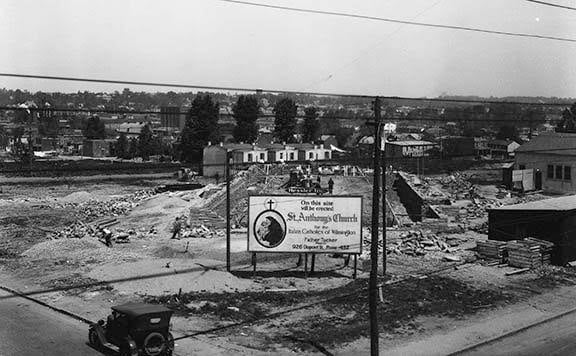
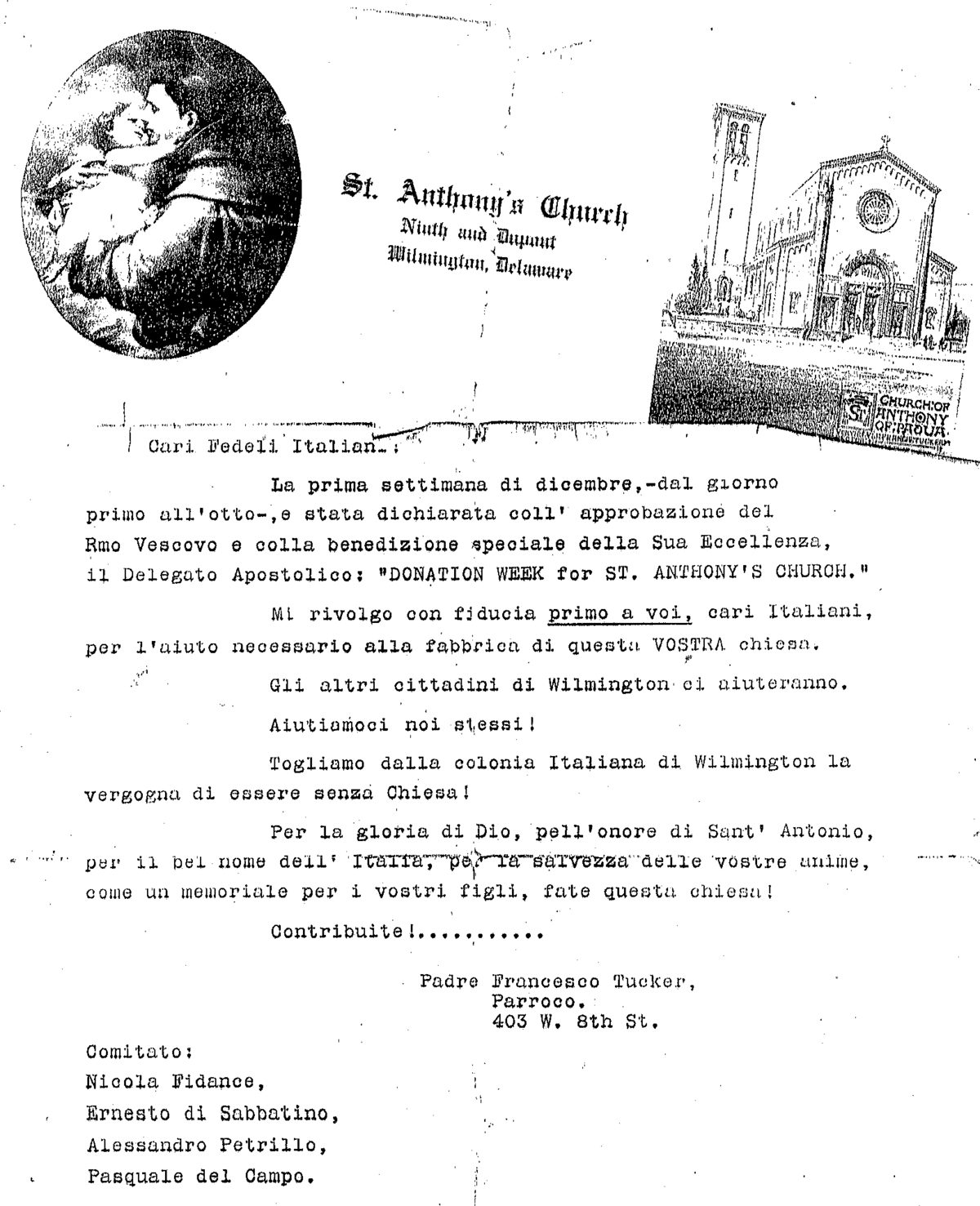
Before a stone was laid, the parish had to raise the money. Father Francis Tucker wrote to Wilmington’s Italians in their own language, on letterhead that already pictured the finished church, and named the four men who would lead the work. Ernesto is the second name on the committee, beside Nicola Fidance, who gave the land.
Dear Italian faithful: The first week of December, from the first to the eighth, has been declared, with the approval of the Most Reverend Bishop and the special blessing of His Excellency the Apostolic Delegate, “Donation Week for St. Anthony’s Church.”
I turn with confidence first to you, dear Italians, for the help needed to build this, your church. The other citizens of Wilmington will help us. Let us help ourselves! Let us lift from the Italian colony of Wilmington the shame of being without a church!
For the glory of God, for the honor of Saint Anthony, for the good name of Italy, for the salvation of your souls, as a memorial for your children, build this church! Contribute!
Undated, from the years the church was being raised. Translated from the Italian. Courtesy of the DiSabatino family archives.
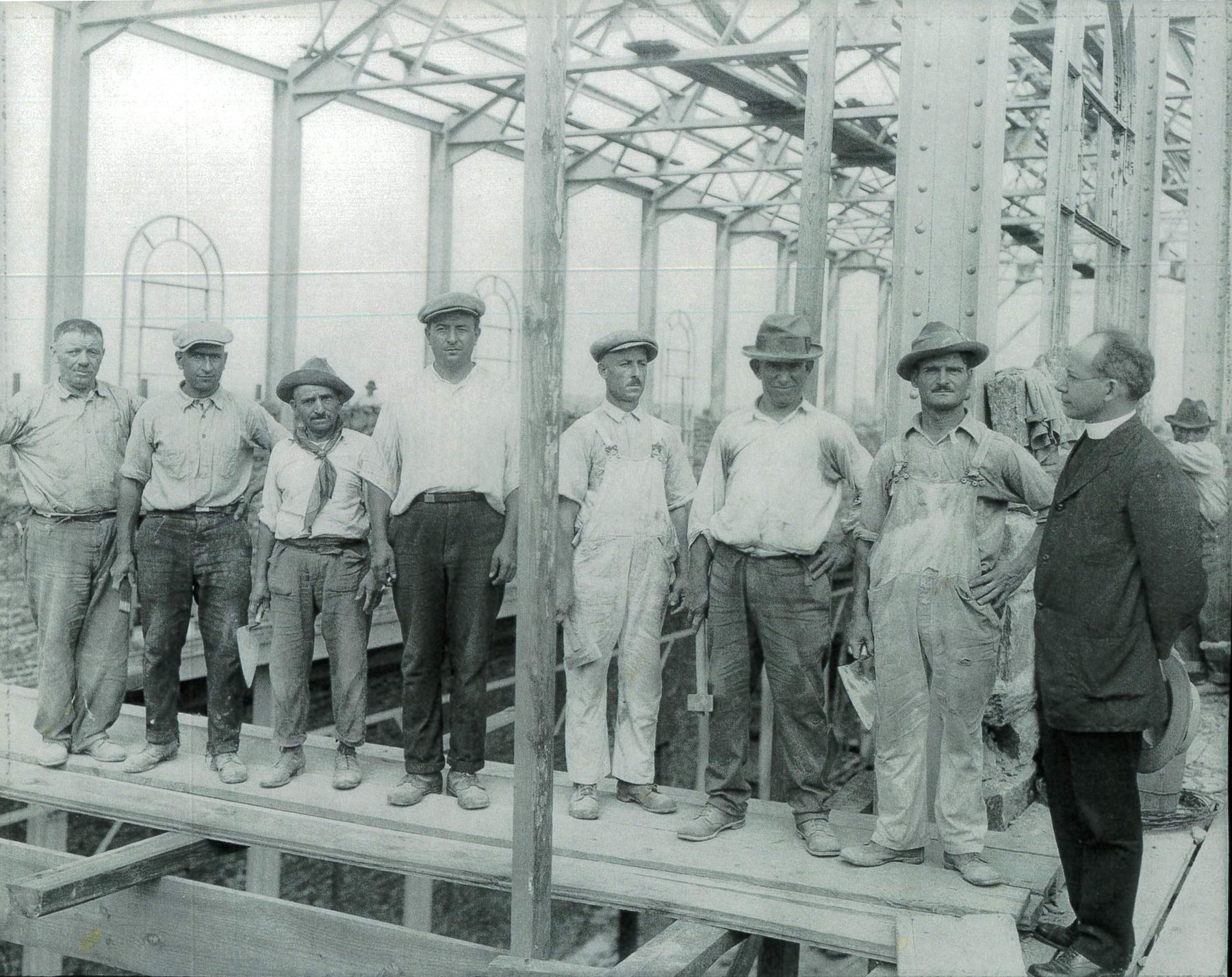
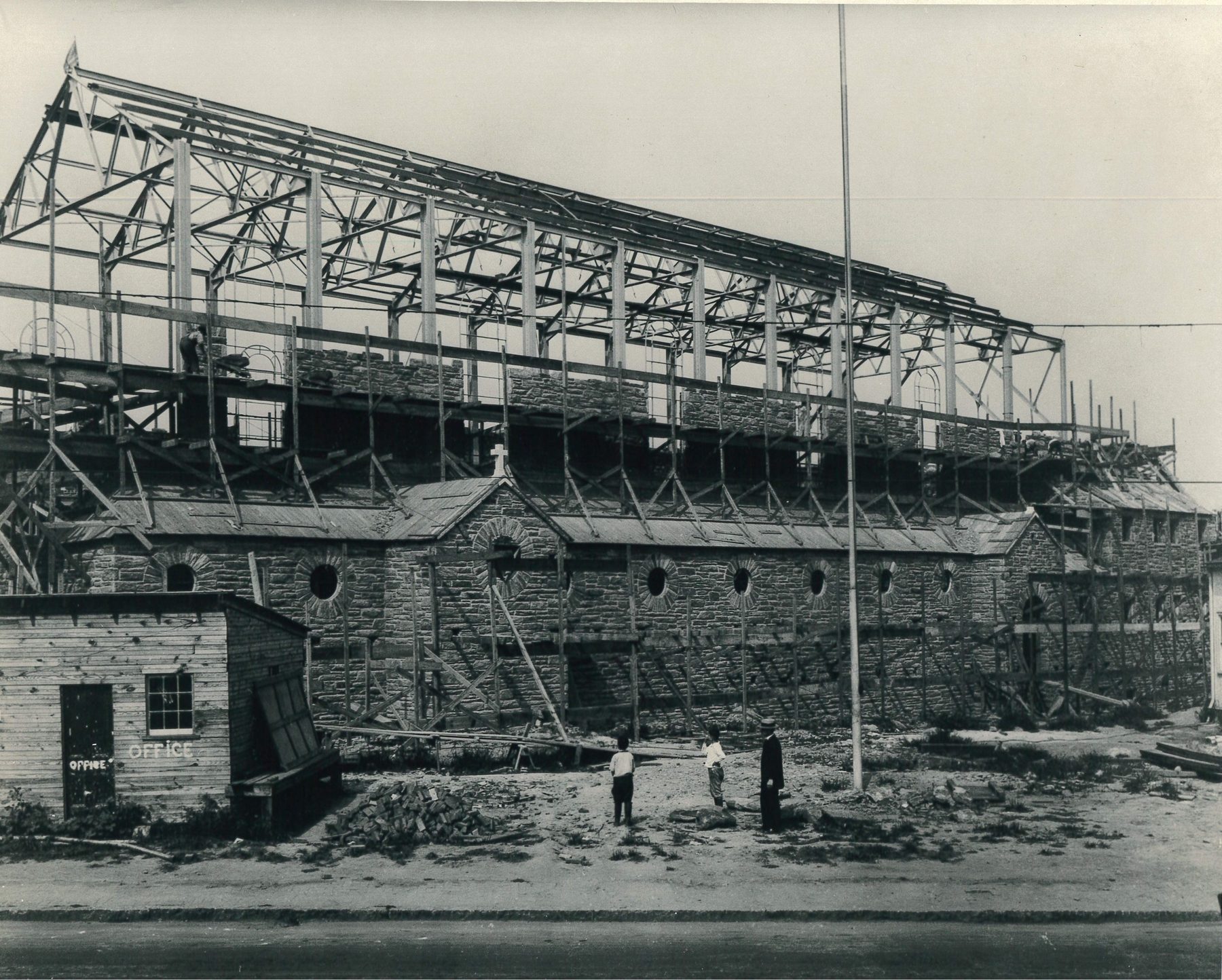
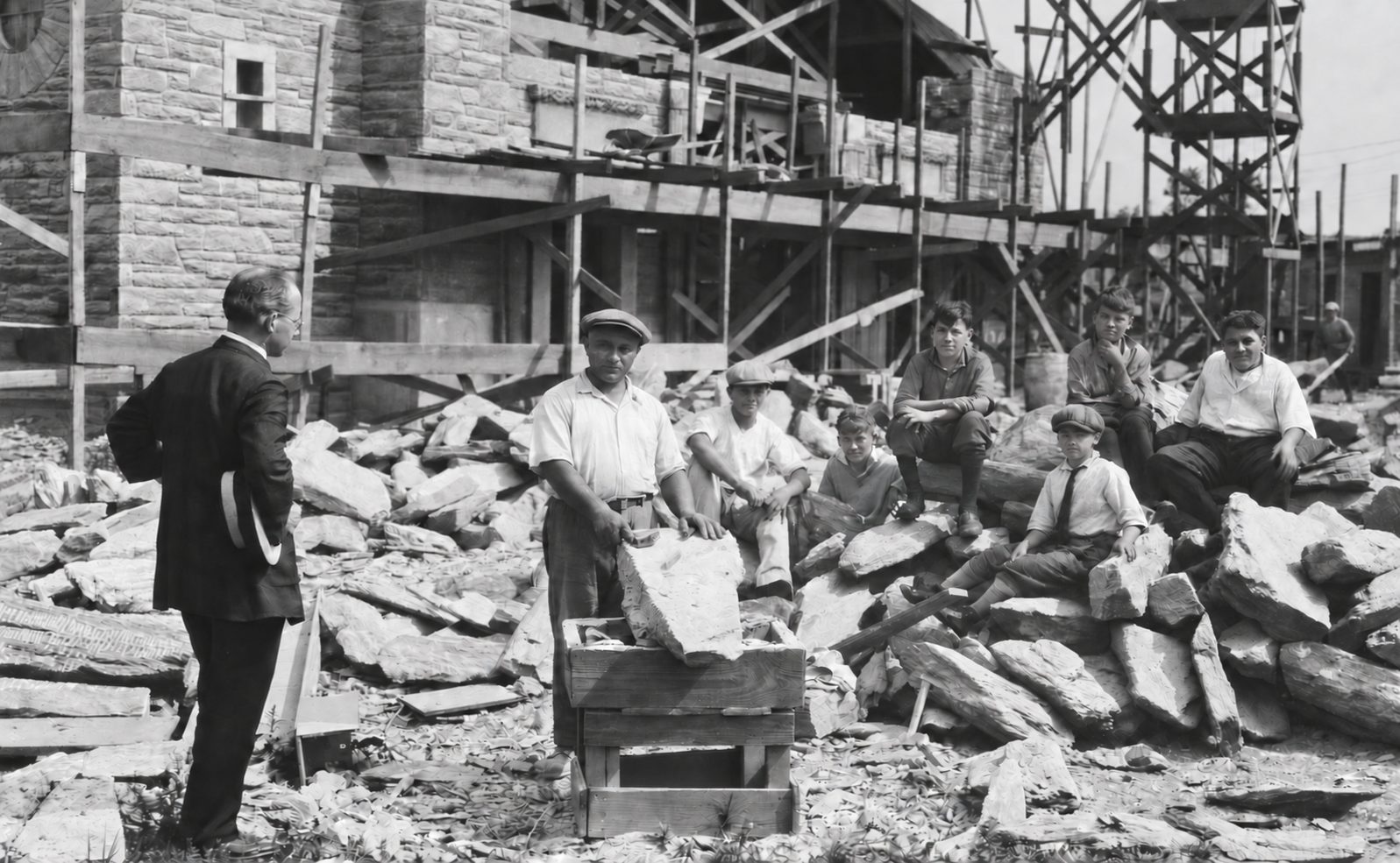
No one remembers the name of the mason holding the stone. The church he helped raise still stands.
Those who set the first table.
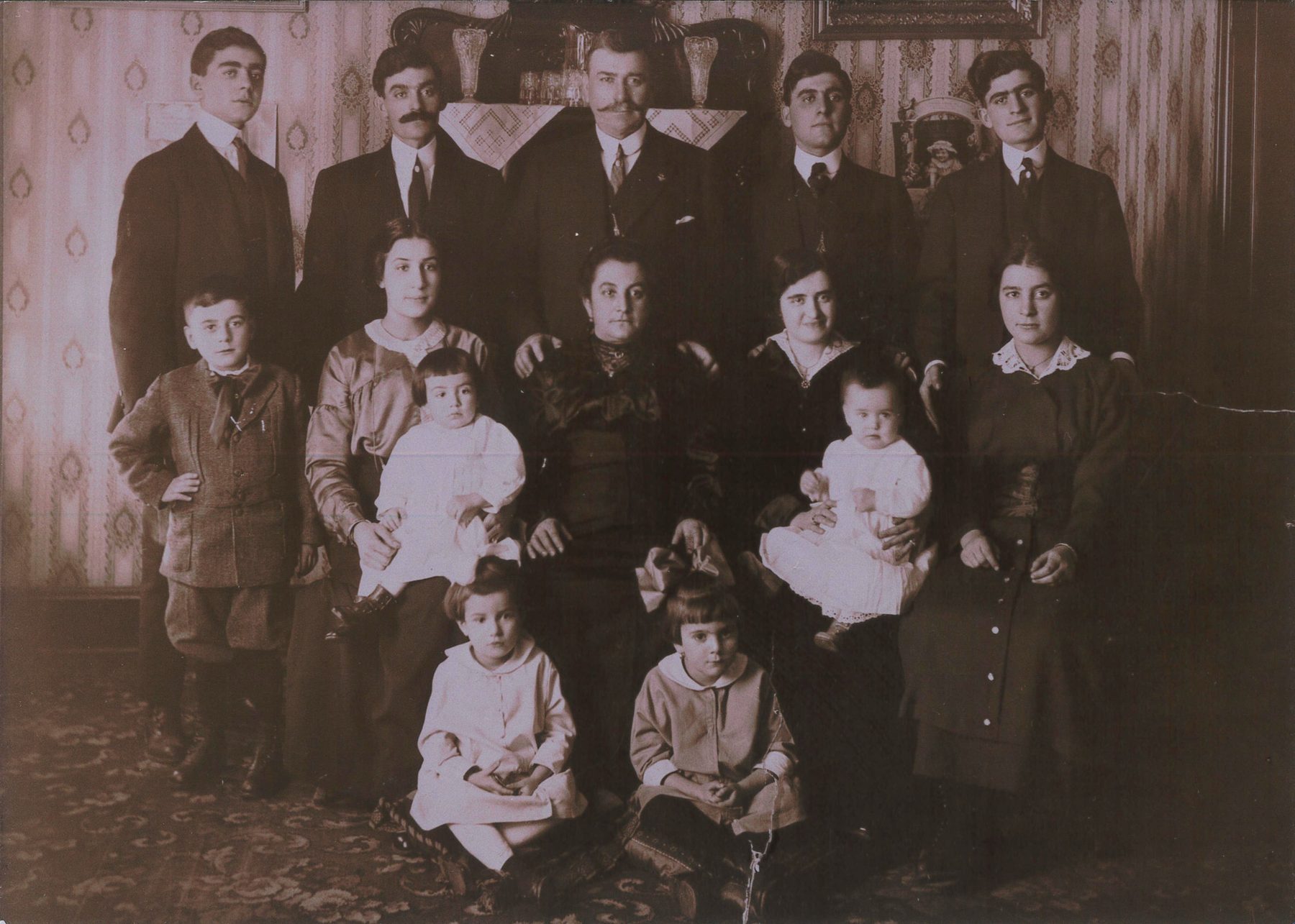
They broke the first stones and carried the first mortar. Every seat at my table was saved by them.
The whole table, ten years on.
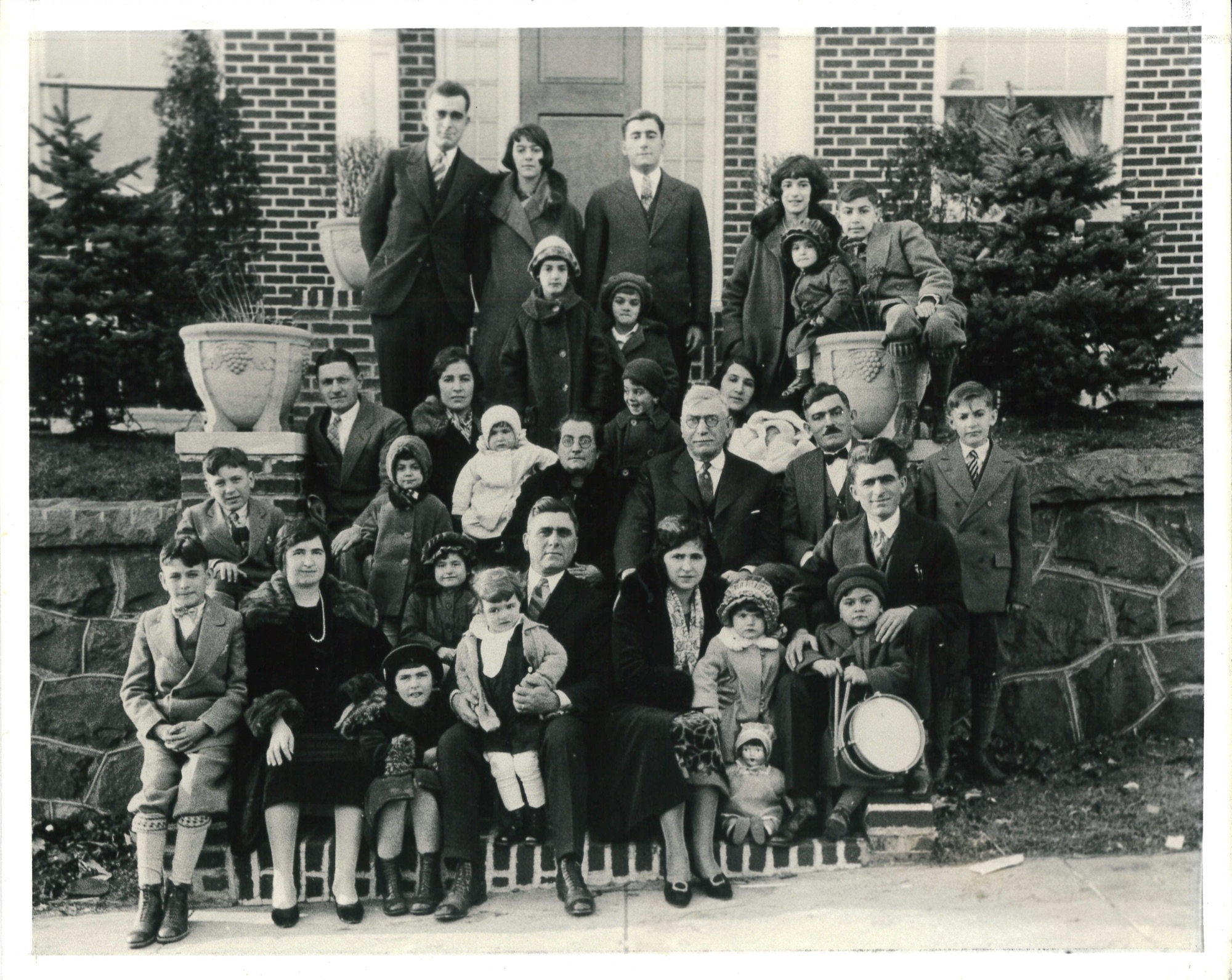
The DiSabatino family at home at Fifth and Rodney Streets, Wilmington, circa 1925, the corner that gives this book’s publisher its name. Angeladea sits at the center, with Ernesto, white-haired and in spectacles, to her left. Courtesy of the DiSabatino family archives.
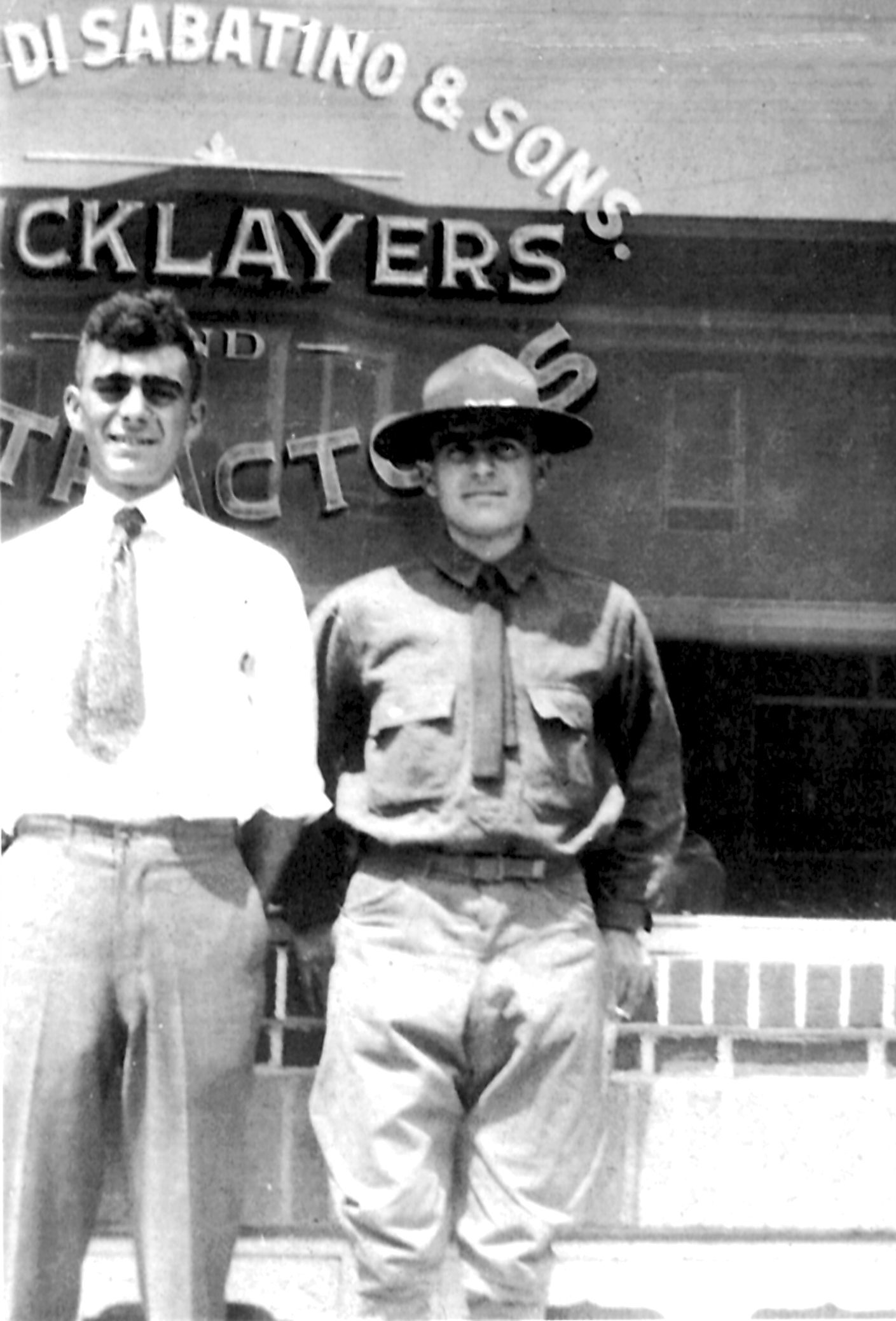
From Ellis Island to an American uniform.
Barely ten years after he left Italy as a boy, Dominick enlisted in the U.S. Army. The immigrant who had been held at Ellis Island now stood ready to fight for America, in the same Europe his family had left behind. He enlisted, trained and waited for orders. The Armistice came first.
They stand in front of the company headquarters, their father’s name painted in an arc above the door: Ernest DiSabatino & Sons, Bricklayers and Contractors.
More stones are coming out of the quarry.
Sixty years after the crossing, Ernesto’s son Dominick sat down with Francis J. Fierro and remembered it all: the tunnels of northern Italy, Christmas aboard the Cedric, the quarantine at Ellis Island, the little sister they lost, and the first bricks his father laid in Wilmington.
Transcribed by Irene H. Long, June 1969. The early years on this page, and the quotations above, are drawn from that transcript. Further details come from La Storia della Famiglia, the family history kept for DiSabatino reunions. The account of the papal honor is from Every Evening, Wilmington, April 7, 1930.
More stories that did not make the book, and photographs from the family archive, will be added here over time.
JOIN THE EARLY READER CLUB