The Reset
A bad stone doesn’t get better with time. It gets buried.
By Brian DiSabatino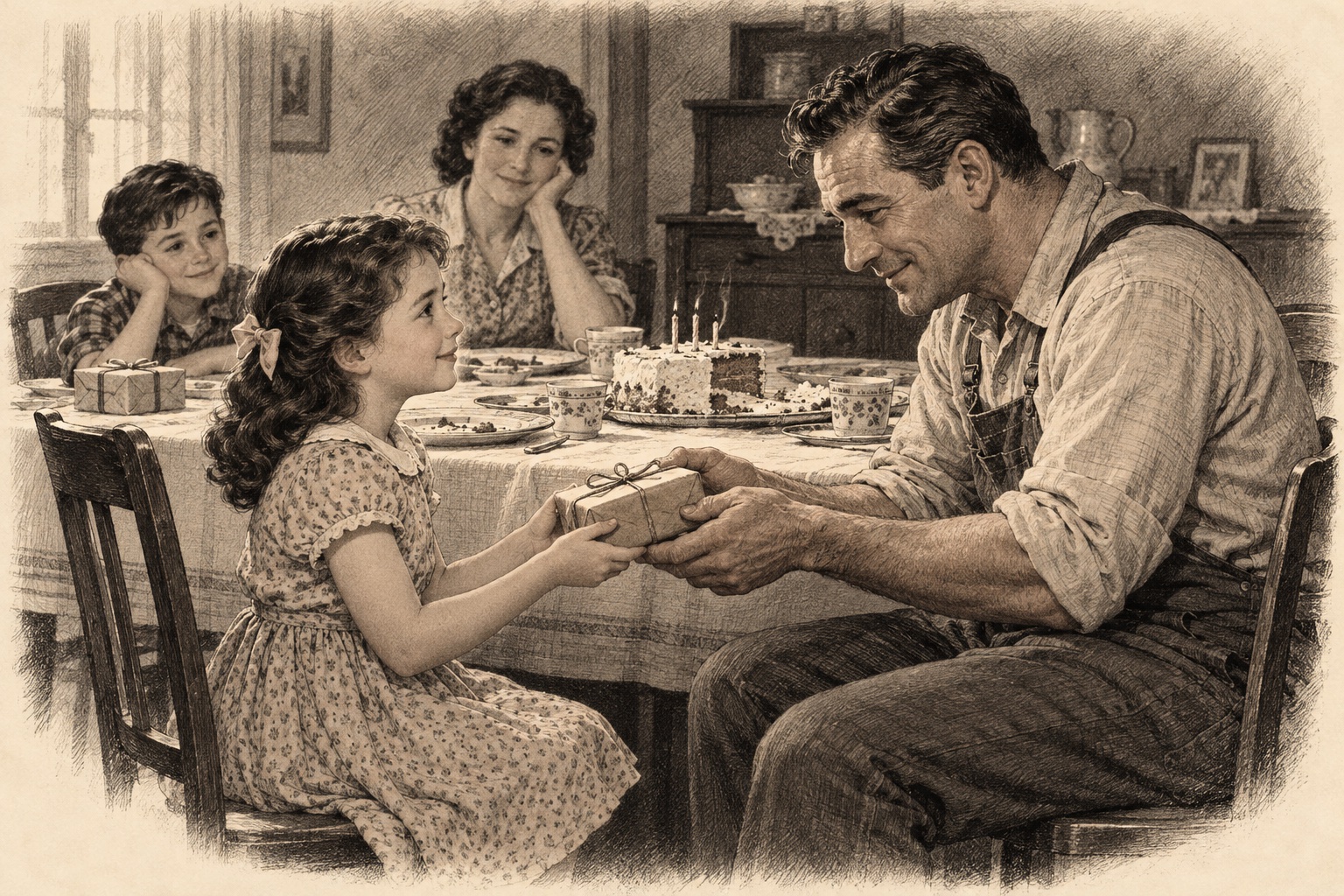
Do you have a birthday tradition in your family? Good. Let me tell you how ours got started, because it didn’t start the way you’d think.
Before I was born, my father had a habit. After work he’d stop at a local watering hole to visit with friends. He called these gatherings “safety meetings,” which is the kind of joke only a construction man finds funny. They were boondoggles. Part networking, part business, mostly just an excuse to spend an hour with men he liked before going home.
On one particular December 7th, he forgot something. His family was home preparing his birthday dinner.
I’ve pictured that evening more times than I can count. The meal finished and sitting there. The cake on the table. The candles not lit because nobody knew when to light them. And when he finally opened the door, a lot of tearful eyes looking back at him.
My father was not a man who missed things. That’s what makes the story hurt. He was present, generous, loud with his love. And on the one night the calendar had circled for him, he was somewhere else, laughing at a safety meeting.
Here is where I have to be honest with you, because the easy version of this story is a greeting card and I don’t write those.
He asked for forgiveness. And on December 8th, he asked if he could hit the reset button.
I want to pause on that date, because it’s not a coincidence I’m willing to waste. December 8th, in my church, is the day set aside to mark the moment God started undoing the long mess that began in a garden. Not by erasing it. The mistake was still there. But by quietly preparing the repair, long before anyone could see it. Whatever your tradition, I think you’ll recognize the idea: it’s the reset day for all of humanity. The morning the direction changed, and everything built afterward was built on something new.
I don’t think my father planned that. I think a good man woke up the morning after the worst night of his year, and the only day he had was the one the whole Church sets aside for starting over. Sometimes grace works like that. It doesn’t wait for you to notice.
So on the eighth, he came back. Everyone sat down again. And instead of receiving gifts, he gave them. Every person at that second birthday dinner went home with something from him.
From that night until the day he died, that was the tradition. On my father’s birthday, you didn’t bring him a present. You left with one. Some years it was as simple as a pair of socks. Some years it was a beautiful shirt. The dollar value never mattered, and neither did the style. What mattered was which direction the gifts were moving.
He had flipped his own birthday inside out. Forty years of giving, as the repair for one night of forgetting.
Now here’s the part I need you to hear, because I’ve spent my life around masons and they taught me something about mistakes.
A bad stone doesn’t get better with time. It gets buried. You lay the next course on top of it, and the one after that, and the wall looks fine from the street for years. Then one day it leans, and by the time you can see why, you have to take down everything above it to fix it.
The tradition my father built was beautiful. I carry it forward with my own children. Every year on my birthday, they leave with something from me, and someday they’ll do it with theirs.
But I won’t pretend the tradition made the first night right. It didn’t. Nothing could. The cake was still cold. The eyes were still wet. What the tradition did was something different, and harder. He set the stone wrong on the seventh, and he knew it, and instead of laying the next course over it and hoping, he went back on the eighth and pulled it out and set it again. Then he built on that. For the rest of his life.
That’s the reset button. It isn’t an eraser. It’s a decision about what you build on top of what you can’t undo.
We all struggle with time. We treat it like it’s renewable, and it’s the one thing that isn’t. There is nothing quite like being an adult and looking at a photograph of a joyous moment, your kids laughing, a day at the beach, a birthday, and praying you were the one holding the camera.
I’ll tell you something I don’t say out loud much. There are photographs in my family album where I ask that question, and I know the answer. I wasn’t holding the camera. I wasn’t in the room. I was at a meeting that felt important, or on a job that felt urgent, or at a safety meeting of my own. The picture is joyous, and I am absent from it, and nobody in the picture even looks like they noticed. That’s the part that takes the air out of me.
I wonder if you have a photograph like that. Most of us do. We just don’t look at it for long.
My father gave me a way to hold it. He handed me the lemon and the lemonade in the same glass, and he never let me think the lemonade erased the lemon. But he also never let me think the lemon was the end of the story.
So here’s my question for you, and I’d ask you not to rush it.
What stone did you set wrong? Not the one that went bad because of weather. The one you knew about at the time.
And what would it cost you to go back tomorrow, on whatever holy day you’ve got, and reset it?
Everybody who comes to dinner leaves with something. That can start any year you want.